FIF and other groups are hosting two open houses on the plan: 5/16 in Tucson and 5/17 in Phoenix. Stop by for more information on BLM’s plan for managing the Monument and for help in writing comments.
The target shooters and off-roaders are putting strong pressure on the BLM to allow inappropriate shooting and riding in the Monument. We need more conservation voices to be heard. Please do your best to attend one of these meetings.
BACKGROUND
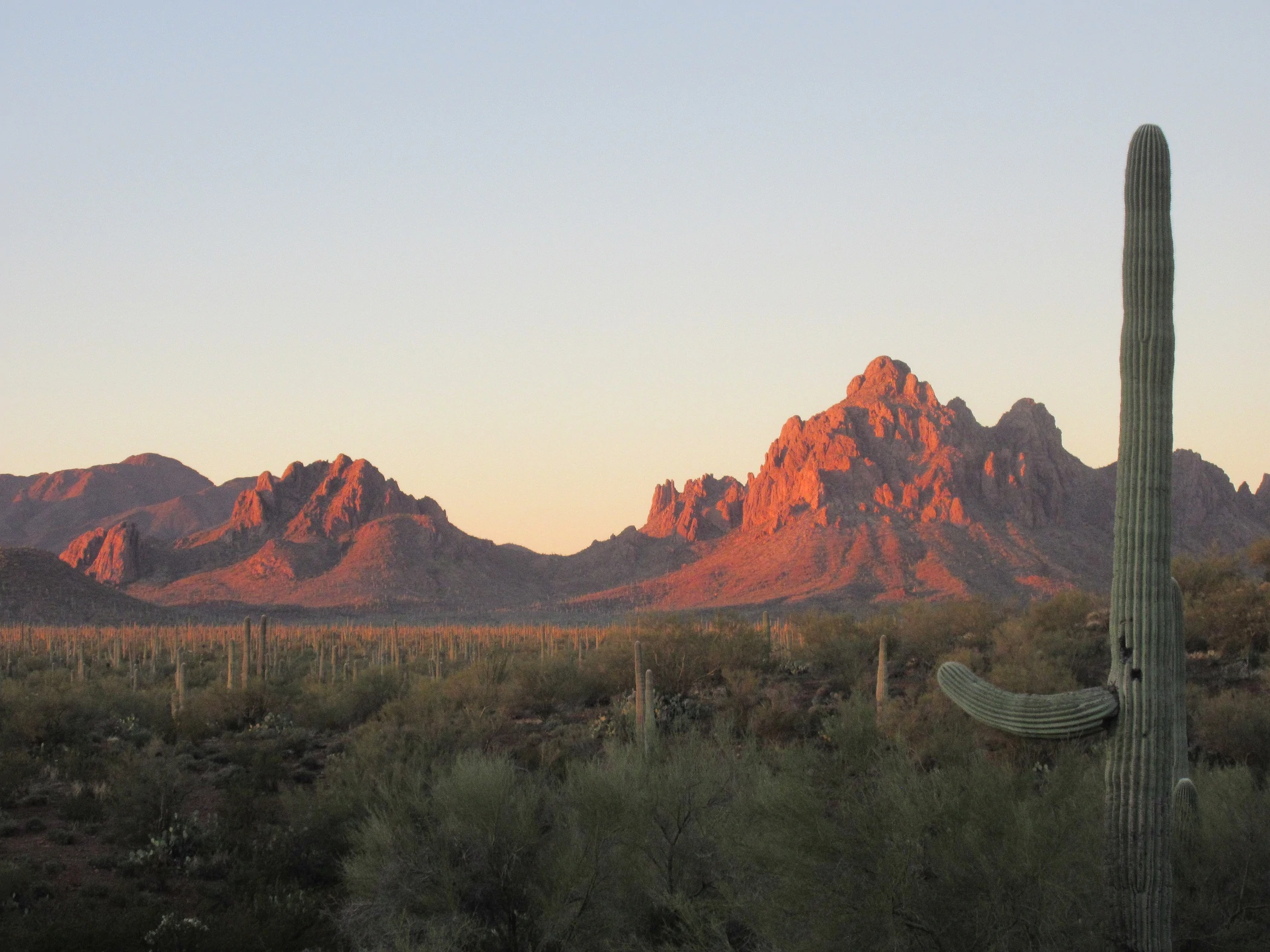
The Ironwood Forest National Monument was established by Presidential Proclamation in June 2000. The 129,000-acre Monument, located about 25 miles northwest of Tucson, encompasses several desert mountain ranges including the Silver Bell, Waterman, and Sawtooth ranges, and possesses one of the richest stands of ironwood trees in the Sonoran Desert. The Monument contains several archaeological districts and a significant system of cultural and historical sites covering a 5,000-year period. The Monument also features a wide diversity of vegetation and wildlife. The ironwood system provides roosts for hawks and owls, burrows for desert tortoise, forage for desert bighorns, nests for white-winged doves and other birds.
The Resource Management Plan is supposed to provide guidelines for protecting these resources and limit impacts in the Monument. However, the BLM’s preferred alternative does not go far enough to provide adequate protection for wildlife, native plants, cultural resources, or primitive areas.
The public has an opportunity to comment on this draft plan until May 30- please do! Comments may be submitted in writing to: Mark Lambert, IFNM Planner, BLM, 12661 East Broadway, Tucson AZ 85748 or may be submitted via e-mail at AZ_IFNM_RMP@blm.gov.
THREATS TO THE MONUMENT
The proximity of the monument to Tucson and Phoenix has also made it attractive to off-road vehicle use. Unchecked cross-country travel destroys fragile desert soils, inhibiting vegetation recruitment and harming wildlife species. Recreational shooting takes its toll on the visual resources and harms vegetation. Livestock grazing may be having long-term ecological consequences, eroding soils, spreading invasive species, and impairing wildlife habitats. In addition, Ironwood Forest National Monument has become a corridor for illegal activities, from undocumented immigrants and drug smugglers to a growing number of so-called “wildcat” roads used and created by law enforcement.
For more information, contact Scott Jones at 602-254-9330 or scott@ironwoodforest.org or Lori Andersen at 520-388-9925 or lori@ironwoodforest.org.
OPEN HOUSES
The Friends of Ironwood Forest, in conjunction with the Sierra Club and other groups, is sponsoring two open houses in order to create a friendly, informative atmosphere and to assist in writing comments. Refreshments, maps, and talking points will be provided. This is your best opportunity to learn more about the plan, the changes BLM should make, and to get help with your comments.
Wed, May 16th, 6 – 8 pm
Pima County Parks and Recreation
3500 West River Road, Tucson
Thu, May 17th , 6 – 8 pm
The Phoenix Zoo (Pavilion)
455 N. Galvin Parkway, Phoenix
If you can’t attend one of the open houses, please consider submitting your own comments. Additional information, including talking points and a sample letter, are included below.
In addition, the BLM is hosting another public meeting specifically for people to provide verbal comments. This meeting is scheduled for May 19, from 10 a.m. to noon, at Pima Community College West Campus, 2202 W. Anklam Road, Tucson, in the Proscenium Theater, located on the east side of the campus. Sign in for speakers will begin at 9:30 a.m. The meeting will be a question-and-answer format with a panel of BLM specialists. Each person will be given up to two minutes to ask a question or provide a comment, which will be recorded by a note taker.
TALKING POINTS
Protection of monument resources is the paramount purpose of Monument designation and multiple uses should only be allowed where they do not conflict with this overarching directive. The BLM should specifically commit to monitoring the resources to ensure no harm to the monument.
Off-road vehicles (ORVs) must stay on 71-miles of existing designated routes. Restrict the repeated use of illegal routes by implementing a “signed open” policy, meaning that roads are not open unless specifically posted as such.
The BLM should use recent road surveys to immediately close illegal spurs, duplicate roads, and roads into unsafe areas. The BLM should also provide periods of active enforcement to ensure compliance from road users.
Target-shooting is not an appropriate use for the Monument. We support the BLM’s plan to ban this practice within the Monument. There are plenty of lands outside the Monument for this activity.
Protect the full 36,990 of wilderness-quality lands in the Monument. The Monument lands offer the opportunity to protect large areas of roadless, scenic landscapes and the BLM should act to maintain these areas, as it provides the best protection for Monument resources.
Desert bighorn habitat should remain unfragmented and undisturbed. Wildlife waters should be kept to a minimum within the Monument.
The BLM must be aggressive in preventing non-native weed infestations in the Monument, since these plants can bring fire, displace native vegetation, and impact wildlife populations. The best way to prevent them is by preventing disturbance from off-road travel, livestock, and development. The BLM should also mandate that only local genotypes of native species will be used in restoration activities.
Livestock grazing leases should be actively considered for retirement and the BLM should allow voluntary compensated relinquishment. Many of these allotments aren’t consistently monitored, leaving too many unknowns about the status of the Monument resources. Allotments that aren’t meeting baseline standards for rangeland health should be closed.
SAMPLE LETTER
Mark Lambert
IFNM Planning Lead
Bureau of Land Management, Tucson Field Office
12661 East Broadway
Tucson, AZ 85748-7208
Dear Mark,
Thank you for providing an opportunity to comment on the draft resource management plan for the Ironwood Forest National Monument. I support the National Environmental Policy Act and appreciate the public participation that it affords. I care about the Ironwood Forest National Monument and I am concerned with and affected by the management of monument resources.
The Presidential Proclamation that established the Ironwood Forest NM recognized the unique values of this special place, including biologic, geologic, and cultural resources. These irreplaceable values must not be destroyed by extractive uses, and the BLM is charged with protecting them above all else.
I applaud the BLM for choosing to limit recreational target shooting in the Monument and strongly agree that this is not an appropriate place for target shooting. Target shooting on the Monument is closely associated with trash dumping and has had clear effects on the native flora. I also support the removal of Area of Critical Environmental Concern (ACEC) designations within the Monument because I believe the entire area should be treated like an ACEC.
I am particularly concerned that the BLM’s preferred alternative does not provide adequate protection for the precious natural resources found on the Monument. In many cases, Alternative B would be better for protecting natural resources. For example, I support the provision in Alternative B to only use native species in revegetation efforts. Non-native species should not be intentionally introduced in the desert southwest since weed invasions are already a problem. Additionally, I do not believe that terming this alternative “the most restrictive” alternative provides an unbiased description of this management style. Instead, I believe the BLM should emphasize that it is the best alternative for wildlife and vegetation, but still provides appropriate levels of use.
I support Alternative B’s provision to manage 36,990 acres of land within the Monument to preserve wilderness characteristics. This represents less than a third of all land within the Monument, but would provide higher quality habitat for wildlife and more opportunities for quiet recreation, which, the BLM notes in the analysis, is the most frequent visitor use.
I support Alternative B’s plan to remove livestock from the Monument at the conclusion of the current leases. The Ironwood Forest is no place to sustain cattle operations without serious and long-term consequences. Given the lack of monitoring data to show that livestock is not harming the land in any way (soils, biological crusts, vegetation-type conversions, Monument resources), the BLM should err on the side of common sense and caution and administratively close the grazing allotments. The RMP should allow for voluntary and/or compensated permanent relinquishment of these permits and should set some firm science-based ecological parameters for administrative closure.
I strongly disagree with the preferred alternative’s provision to allow off-road vehicle travel on 142 miles of routes through 117,530 acres. Alternative B, which allows for 71 miles of roads through 90,360 acres is more than enough area to manage for off-road vehicle travel. In addition to minimizing the total miles of routes open to ORV travel, the BLM also has the responsibility to ensure that routes and trails avoid and/or do not cause disturbance to sensitive wildlife habitats and riparian areas. These noisy, polluting machines disturb wildlife, degrade air quality, spread non-native species, crush vegetation, destroy cultural resources, accelerate erosion and are generally not compatible with the preservation of Monument resources or values. The BLM must not cave to political pressure to allow ORV users broad access to this national treasure. Imposing strong limits on motorized vehicle travel will also help prevent the further proliferation of illegal, user-created wildcat routes that so clearly impact the monument’s resources.
Thank you for considering my comments and please keep me informed when the final plan comes out.
Sincerely,